
The City’s Rot and the Desire for Cleansing
Taxi DriverThis thread traces how Travis’s descriptions of urban disorder develop into a moral rhetoric of cleansing, and how that rhetoric supports increasingly dangerous action.
increasing Bearing strength in each event
 decreasing
Bearing strength in each eventdecreasingSnow and Street Dirt
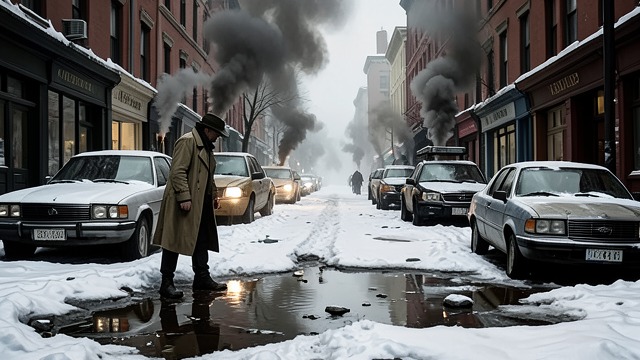
Snow and Street Dirt
A city noticed
Travis records dirty snow, exhaust, and street scenes that make New York City appear physically and morally polluted. He treats the visible grime as evidence of a deeper disorder.
Observation becomes judgment
His descriptions are precise in detail but sweeping in their conclusions. The city’s complexity narrows into a single image of contamination.
The Cab as Confessional
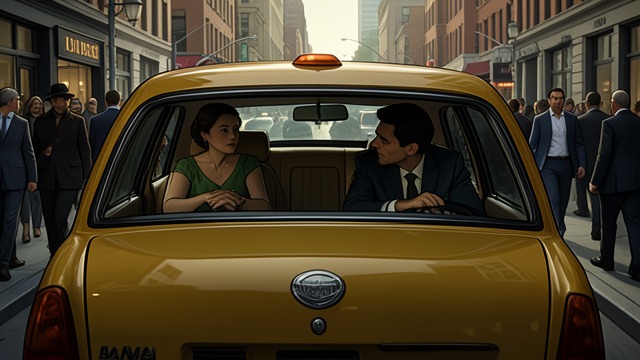
The Cab as Confessional
Passengers disclose
Clients tell Travis fragments of their private lives, including grief, divorce, and uncertainty. Their stories pass through his cab without developing into relationships.
Listening without understanding
He recognizes suffering but usually keeps distance from it. The cab becomes a moving confessional in which people speak while the driver remains unseen.
The Cleansing Demand
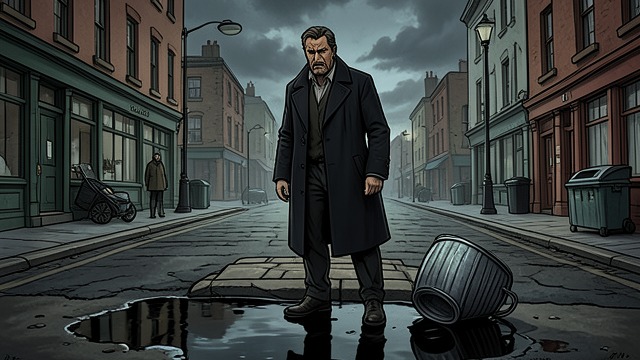
The Cleansing Demand
Public language for private anger
Travis tells Palantine that the city needs cleaning and compares its streets to an open sewer. He wants someone in authority to make the filth disappear.
A violent metaphor
His language frames human beings as waste rather than neighbors. The metaphor prepares a moral justification for action that treats people as pollutants.
City and Race at the Rally
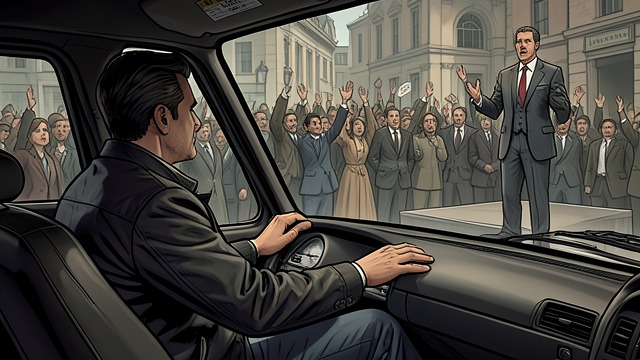
City and Race at the Rally
Public promises
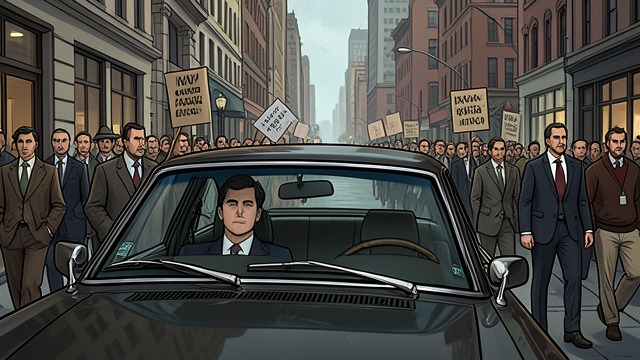
Palantine speaks against racism, poverty, and war while a crowd listens. Travis sits in his taxi and writes a reassuring letter to his parents.
Contradictory worlds
The campaign offers collective language and a vision of unity, while Travis remains armed and alienated nearby. Political idealism and private threat occupy the same street.
The Dirt Left Behind
The Dirt Left Behind
No final purification
Travis’s violent actions do not transform the city or resolve its inequalities. He returns to driving through the same streets.
A personal rather than civic ending
Public praise casts his actions as cleansing, but the narrative preserves the tension between civic improvement and private rage. The city remains more complicated than his verdict on it.
During Travis’s first winter in New York City
During Travis’s early nights on the job
During Travis’s ride with Charles Palantine
At Palantine’s summer speech in Harlem
After the violence and the return to work
